
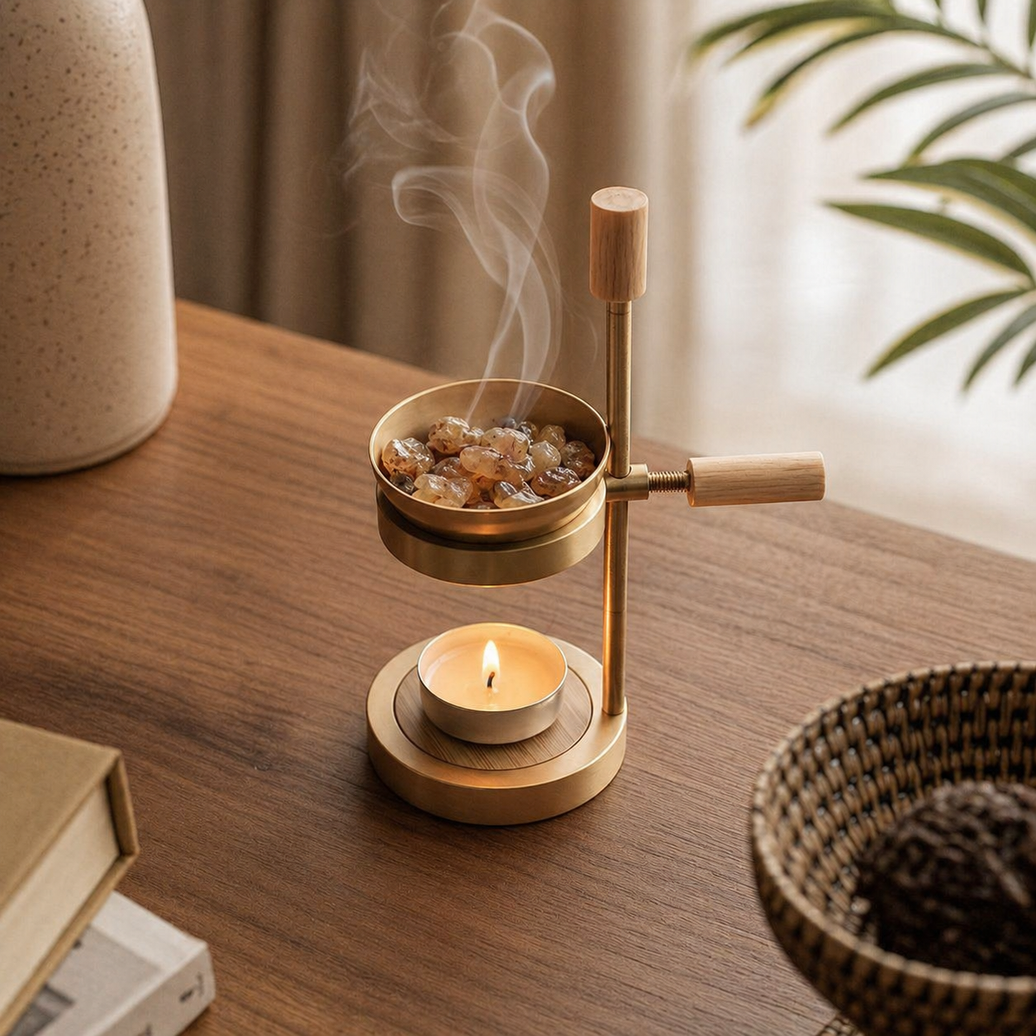
Resin incense offers a very different experience from incense sticks and cones. Natural aromatic resins such as frankincense, myrrh, benzoin and copal do not need to burn with their own flame. Instead, they release their aroma when heat is applied.
Charcoal is the traditional heat source, but it is not the only option.
If you prefer a gentler and more controllable way to enjoy natural resins at home, resin incense can be warmed without charcoal using indirect heat from a candle or a suitable electric incense warmer.
This guide explains what resin incense is, how charcoal-free heating works, which resins you can try, and how to avoid common problems such as scorching the resin or producing more smoke than you want.
What Is Resin Incense?
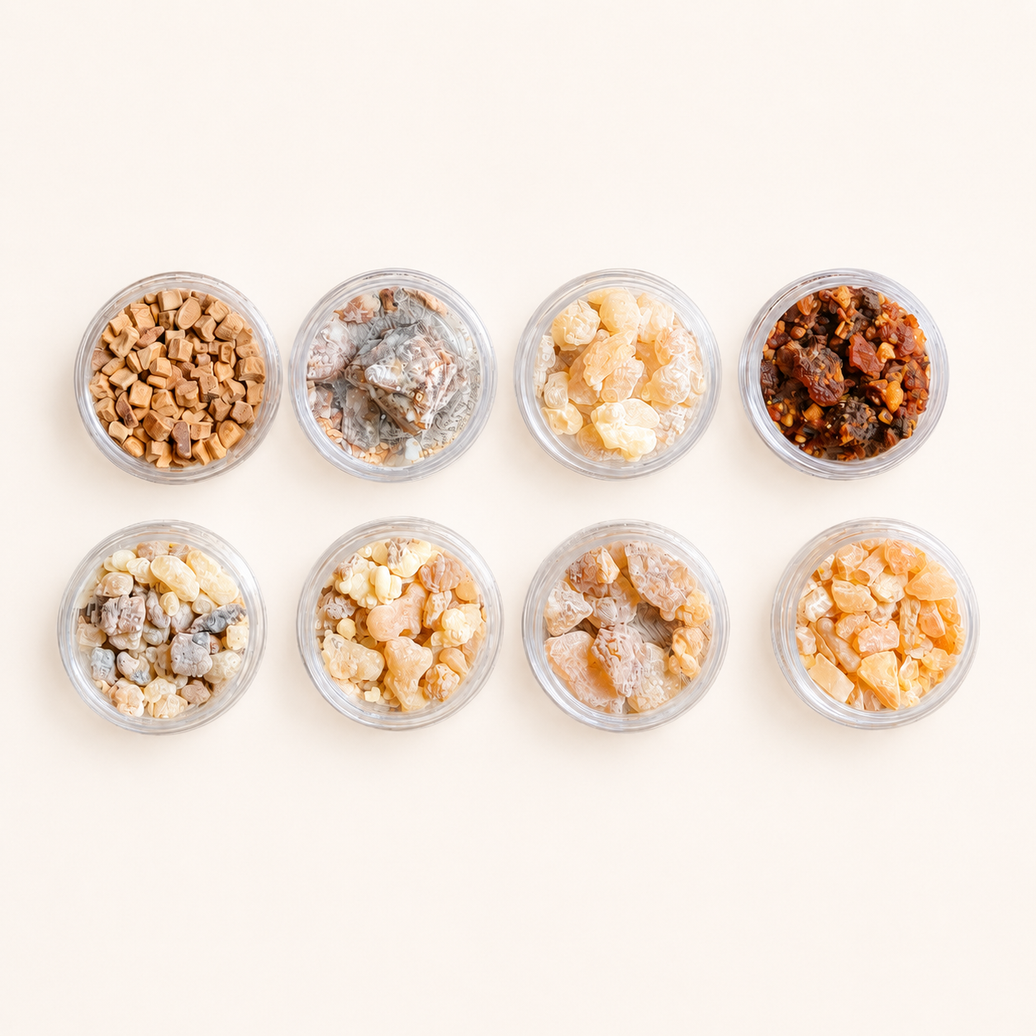
Resin incense is an aromatic natural material obtained from certain trees and plants. After the resin is collected and allowed to harden, it forms small pieces often referred to as resin tears, grains or chunks.
Some of the best-known aromatic resins include:
-
Frankincense — fresh, resinous, woody and sometimes citrus-like
-
Myrrh — deeper, earthy, warm and slightly bitter
-
Benzoin — sweet, warm and balsamic, often with vanilla-like notes
-
Copal — typically bright, fresh and resinous
Unlike an incense stick or cone, natural resin usually does not contain a combustible base designed to keep it continuously burning.
That means you generally do not light a piece of resin and expect it to burn by itself.
Instead, heat is used to release its aromatic compounds.
This distinction is important because it gives you several ways to enjoy resin incense.
Do You Need Charcoal to Burn Resin Incense?
No.
Charcoal is one of the oldest and most familiar methods of heating resin incense, but resin can also release its fragrance through indirect heat.
Three common approaches are:
-
Charcoal
-
Candle-heated incense burners
-
Electric resin warmers
Each method creates a different experience.
Charcoal provides intense heat and usually produces a stronger, smokier result.
Electric warmers can provide controlled and consistent heat.
Candle-heated burners sit somewhere between the two: they use a simple flame as the heat source while keeping the resin separate from the flame.
For home fragrance, some people prefer indirect heating because it allows the resin to warm more gradually.
How Does a Candle-Heated Resin Burner Work?
The principle is simple.
A tealight candle burns at the bottom of the burner while the resin sits in a heat-resistant dish above it.
The candle heats the dish.
The dish heats the resin.
As the temperature increases, the resin begins releasing its aroma.
The resin itself does not need to touch the flame.
This creates a simple heat path:
Candle → Incense Dish → Resin → Aroma
The distance between the flame and the incense dish matters because it affects how much heat reaches the resin.
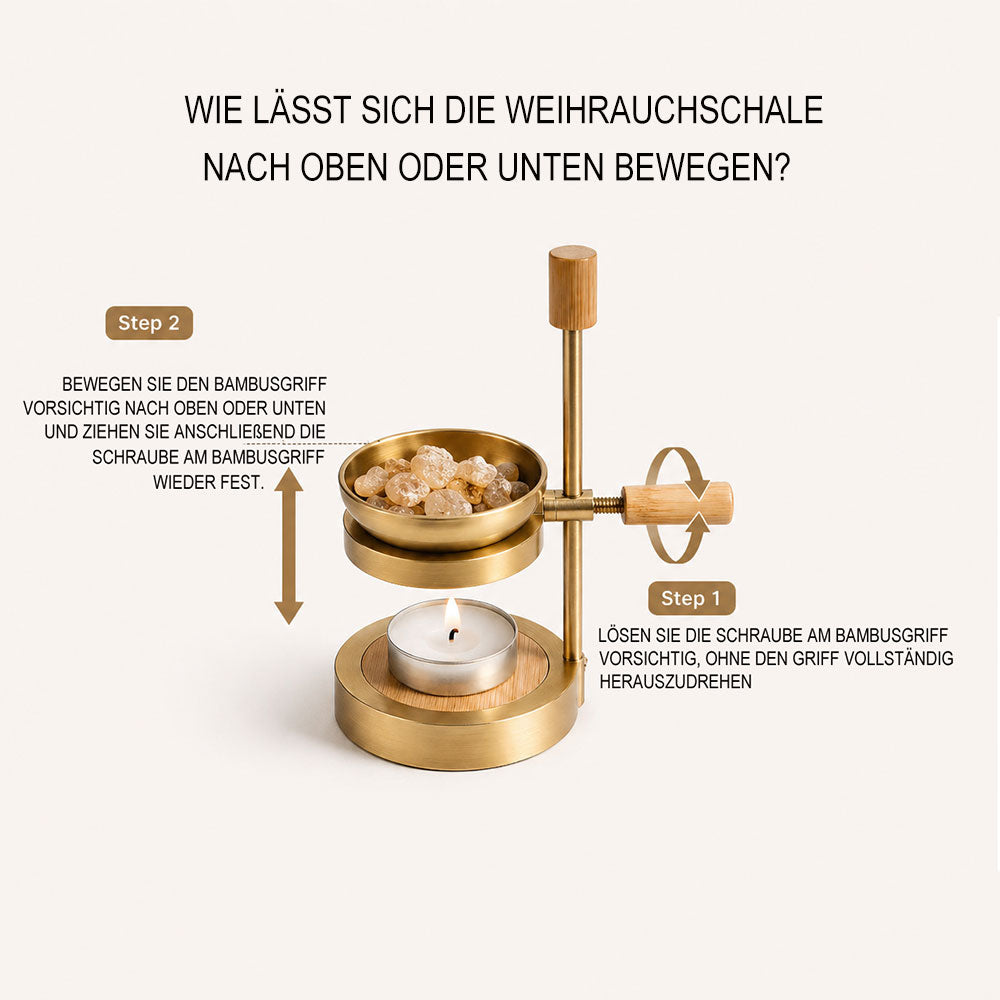
This is why an adjustable-height burner can be useful: instead of having only one fixed heating level, you can change the distance between the candle and the resin.
How to Burn Resin Incense Without Charcoal
Step 1: Choose Your Resin
If you are new to natural resin incense, frankincense is an easy place to begin.
You can also experiment with myrrh, benzoin or copal.
Different natural resins behave differently when heated, so do not expect every resin to melt, smoke or release fragrance in exactly the same way.
Step 2: Start With a Small Amount
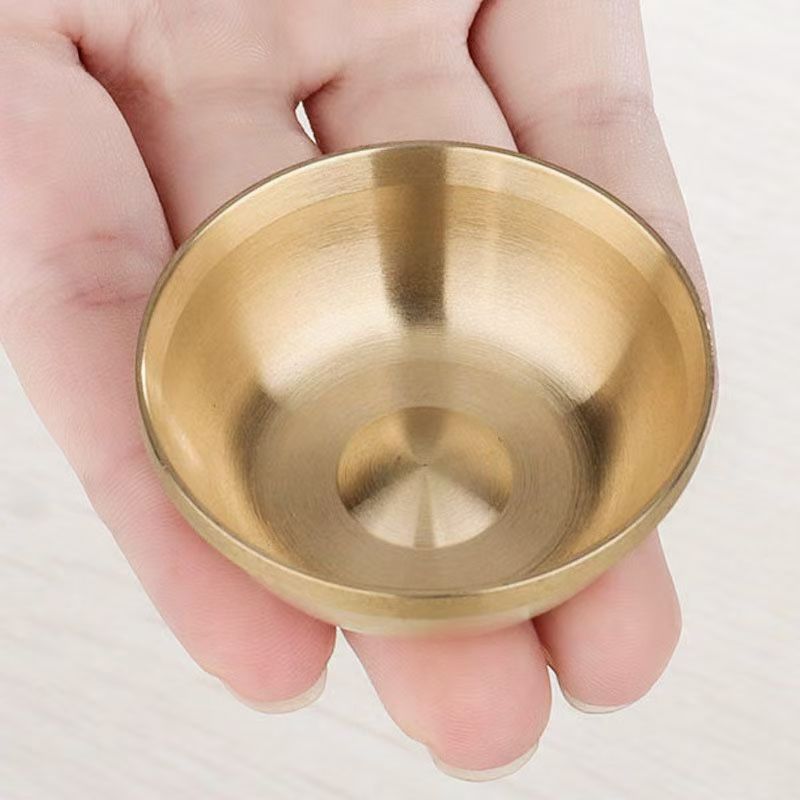
Place a small piece or a few small grains of resin in a heat-resistant incense dish.
More resin does not automatically produce a better fragrance.
Starting small makes it easier to understand how the material reacts to heat and allows you to add more later if necessary.
Step 3: Place an Unscented Tealight Below the Dish
Put an unscented tealight securely in the burner.
An unscented candle is preferable because scented wax can interfere with the natural aroma of the resin.
Make sure the burner is standing on a stable, heat-resistant surface.
Step 4: Light the Candle and Allow the Dish to Warm
Light the tealight and give the burner time to warm.
Charcoal-free heating is generally more gradual than placing resin directly on hot charcoal.
You may need to wait several minutes before the aroma becomes noticeable.
That is normal.
The objective is not to make the resin burst into smoke immediately. The goal is to find enough heat to release its fragrance without unnecessarily scorching it.
Step 5: Adjust the Heat
If you are using an adjustable burner, the distance between the candle and resin dish becomes your temperature control.
If the fragrance is too weak after the dish has had time to warm:
Move the dish slightly closer to the flame.
If the resin darkens very quickly, smells burnt or produces more smoke than you want:
Move the dish farther away from the flame.
Make small adjustments and give the resin time to respond.
Think of burner height as a manual temperature dial.
Step 6: Replace the Resin When the Aroma Fades
Eventually, the aromatic material will be exhausted.
Allow the burner and dish to cool before removing the used resin.
Clean or replace the material as appropriate for your burner, then add a fresh small amount when you want to continue.
Charcoal vs. Candle vs. Electric Resin Burners
There is no single heating method that is best for everyone.
Charcoal
Charcoal produces very high heat and can release fragrance quickly and intensely.
It is closely associated with traditional resin-incense burning and is appropriate when a stronger smoky experience is desired.
However, charcoal also produces its own combustion, ash and additional heat.
Candle-Heated Burner
A candle-heated burner uses indirect heat.
The resin sits above the flame rather than directly on a charcoal disc.
With an adjustable design, the distance between the flame and resin can be changed to alter the heating intensity.
This method can be particularly convenient for people who want to enjoy natural resin incense at home without preparing charcoal.
Electric Resin Warmer
Electric warmers use an electric heating element instead of an open flame.
Some models provide adjustable temperature settings, making them suitable for people who want consistent and precise heating.
The disadvantage is that they require electricity and create a different ritual and visual experience from a candle or traditional burner.
The right choice depends on whether you prioritize tradition, smoke intensity, temperature control, simplicity or atmosphere.
Why Temperature Matters With Resin Incense
One of the most common mistakes beginners make is assuming that more heat always produces better fragrance.
It does not.
Too little heat may release almost no aroma.
Too much heat can cause resin to scorch quickly, creating a harsher smell and more smoke.
Between these two extremes is a useful heating range where the resin gradually releases its aromatic character.
This is one reason indirect heating is interesting: instead of treating incense as simply “burning” or “not burning,” you can think of heat as something you control.
How Different Resins Behave
Natural resins vary considerably.
Frankincense
Frankincense is one of the best-known resin incenses and is often a good starting point for beginners.
When gently warmed, its aroma can develop gradually rather than being released all at once.
If you specifically want to learn about frankincense, read our guide: How to Burn Frankincense Resin Without Charcoal.
Myrrh
Myrrh generally has a deeper, warmer and more earthy aromatic profile than frankincense.
It can be used by itself or combined with frankincense.
Because different pieces and grades behave differently under heat, begin with a small amount and adjust gradually.
Benzoin
Benzoin is known for a warm, sweet and balsamic aroma.
It may soften or melt considerably when heated, so a suitable dish is particularly useful.
Copal
Copal is a broad name used for several aromatic tree resins.
Depending on its origin and type, its aroma can range from bright and fresh to deeper and more resinous.
As with other resins, begin with moderate heat rather than immediately exposing it to the strongest possible temperature.
Can You Mix Different Resin Incenses?
Yes.
Natural resins are often combined to create more complex aromatic profiles.
Frankincense and myrrh are perhaps the best-known pairing, but combinations involving benzoin, copal and other aromatic materials are also possible.
For beginners, however, it is useful to heat each resin individually first.
This teaches you:
-
How quickly it responds to heat
-
How strong its aroma is
-
Whether it melts easily
-
How much smoke it produces
-
What temperature range you prefer
Once you understand each material individually, blending becomes much easier.
Common Problems When Heating Resin Incense
“I Can't Smell Much”
The dish may not yet be hot enough.
Allow more time before changing anything. If necessary, gradually increase the heat by reducing the distance between the candle and the dish.
“The Resin Smells Burnt”
The temperature may be too high.
Reduce the heat or increase the distance between the flame and the incense dish.
“There Is Too Much Smoke”
Strong smoke can be a sign that the resin is receiving more heat than you prefer.
Reduce the temperature and use a smaller quantity.
“My Resin Doesn't Melt”
Not every natural resin behaves the same way.
Some soften or liquefy noticeably, while others change much less visibly. Melting is not the only indication that aromatic compounds are being released.
Choosing a Burner for Resin Incense
If you want to use natural resin without charcoal, look for a burner designed to provide indirect, controllable heat.
Useful characteristics include:
-
A stable base
-
A heat-resistant incense dish
-
Secure support above the candle
-
Sufficient separation between flame and resin
-
Easy cleaning
-
Adjustable heating distance if possible
The Aurooa Adjustable Brass Incense Burner uses a tealight candle as its heat source and allows the height between the candle and incense area to be adjusted.
This makes it possible to use the burner with natural resins such as frankincense, myrrh, benzoin and copal while manually changing the heating intensity.
Rather than forcing every aromatic material to use one fixed temperature, the burner allows you to experiment with the heat level that works best for the resin you are using.
A Different Way to Experience Natural Incense
Resin incense does not have to mean charcoal, heavy smoke and ash.
Traditional charcoal burning remains an important and effective way to experience natural resins, particularly when an intense aromatic and smoky result is desired.
But it is not the only method.
Indirect candle heating offers a different approach: slower, adjustable and suited to people who want to explore natural aromatic materials without placing them directly on charcoal.
Once you begin thinking of resin incense in terms of controlled heat rather than simply fire, frankincense, myrrh, benzoin, copal and other natural resins become much easier to experiment with.
Frequently Asked Questions
Can you burn resin incense without charcoal?
Yes. Natural resin incense can be warmed using indirect heat from a suitable candle-heated incense burner or an electric resin warmer. Charcoal is traditional, but it is not the only heat source.
Do you light resin incense directly?
Generally, no. Unlike self-burning incense sticks and cones, natural resin incense normally requires an external heat source to release its aroma.
What resin incense is best for beginners?
Frankincense is a popular starting point. Myrrh, benzoin and copal are also widely used aromatic resins, but each has a different scent and heating behavior.
Can frankincense and myrrh be burned together?
Yes. Frankincense and myrrh can be combined, although beginners may find it useful to try each resin separately first so they can understand how each responds to heat.
Why does my resin smell burnt?
The resin may be receiving too much heat. Reduce the temperature or increase the distance between the resin dish and the heat source.
Does resin incense have to produce smoke?
No. The amount of smoke depends on the resin, quantity and temperature. Gentle indirect heating may release aroma with considerably less visible smoke than direct high-temperature burning.
Can I use a regular oil burner for resin incense?
Only use a burner for materials and temperatures it was designed to handle. Resin can become sticky, melt and require substantially different cleaning and heating conditions from fragrance oils. Follow the burner's manufacturer instructions.
Safety Note: Always place incense burners on a stable, heat-resistant surface. Never leave a lit candle, charcoal disc or heated incense burner unattended. Keep hot burners, candles and incense materials away from children, pets, drafts and flammable objects. Allow all components to cool completely before touching or cleaning them.
Lascia un commento