
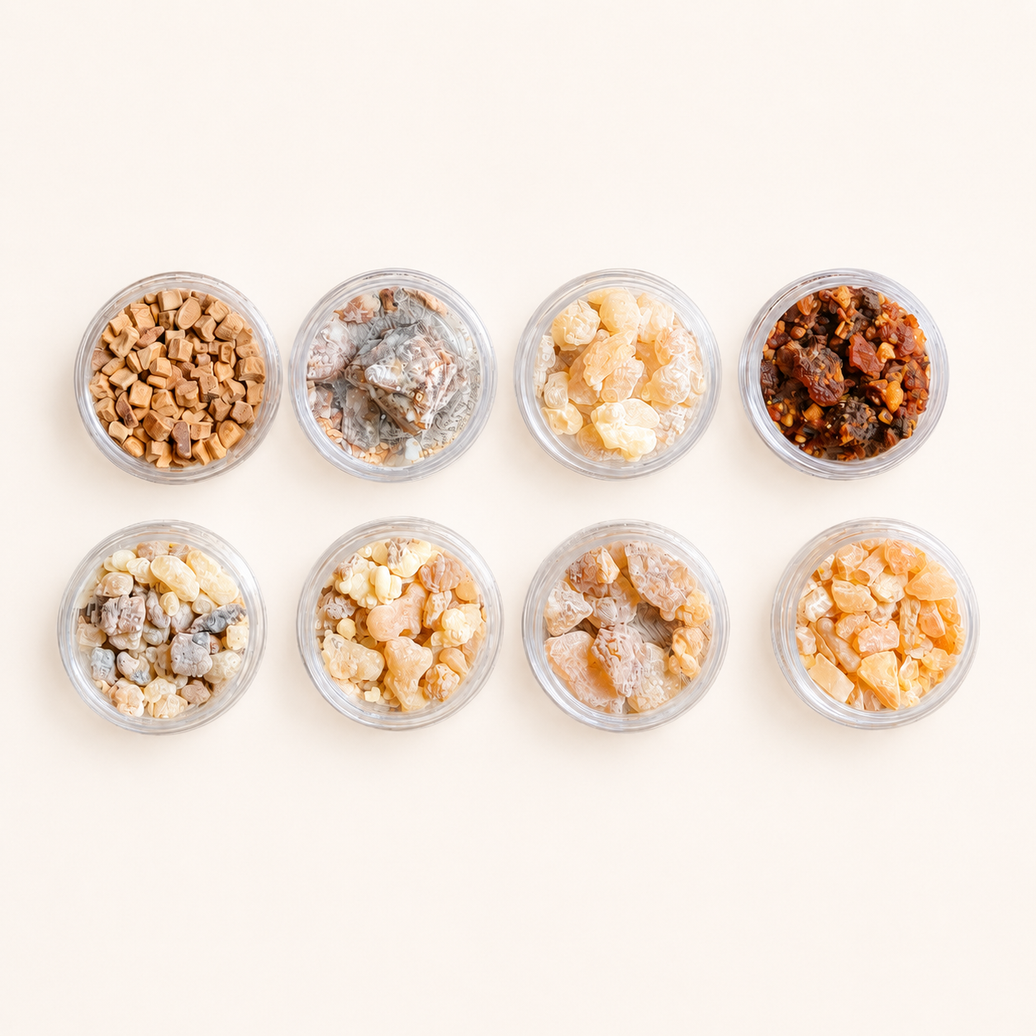
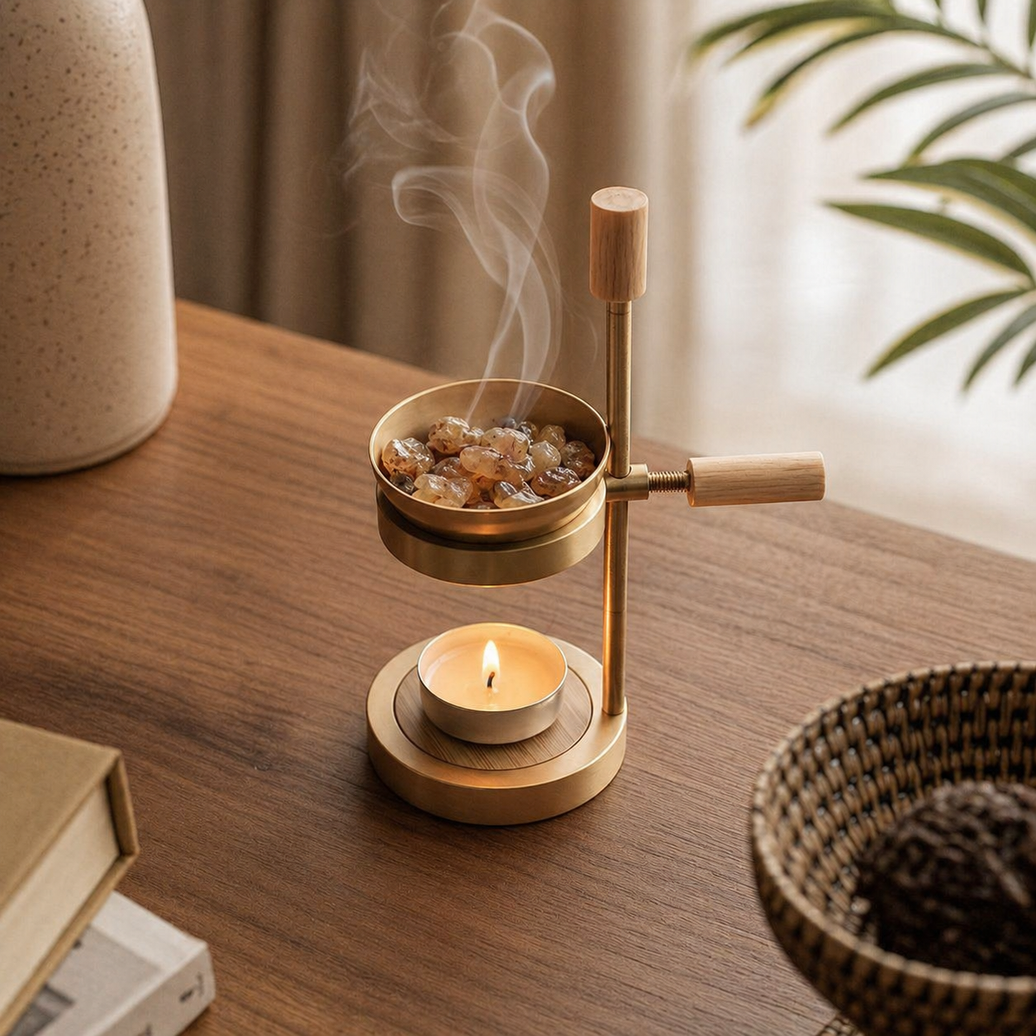
Frankincense, an ancient resin often praised as the “Tears of God” or “Desert Gold,” has held an important place in both religious rituals and medicine since ancient times. It is not only seen as a medium connecting humans with the divine, but also regarded in traditional medicine as a valuable remedy for promoting blood circulation and relieving pain.
However, there are many types of frankincense on the market, and they differ significantly in both incense experience and medicinal value.
A Sensory Feast in the World of Incense: Comparing the Aromas of Four Main Types of Frankincense
In incense culture and aromatherapy, frankincense is highly valued for its rich and complex layers of scent. Resins produced by Boswellia trees from different regions can create very different aromatic experiences when burned or diffused.
1. Royal Green Hojari Frankincense from Oman

Boswellia sacra
This type is often regarded as the “top-tier” frankincense. Its resin granules often carry a light yellow-green hue, and even when smelled raw, they give off a unique freshness.
When heated or burned, it releases an elegant woody aroma, accompanied by a cooling note similar to lime and mint. The smoke is clean, refined, and long-lasting. This crisp and sacred scent makes it especially suitable for meditation, yoga, or moments requiring deep relaxation.
Main characteristics:
Pure, fresh, and sacred aroma
Soft and gentle layers
Suitable for quiet and relaxing spaces
Suitable scenes:
Meditation, yoga, and deep relaxation.
2. Somali Frankincense

Boswellia carterii
This is one of the most common classical types on the market. It usually has a reddish-brown color. When raw, its scent is relatively mild, but once burned, it releases a rich citrusy pinewood aroma mixed with a subtle smoky note.
This warm and comforting fragrance has a soothing quality, making it very suitable for scented candles or daily home fragrance. It can help create a cozy atmosphere.
Main characteristics:
Rich aroma
Noticeable resinous character
Suitable for everyday home incense use
Suitable scenes:
Creating a warm atmosphere, daily incense use, and traditional medicinal use. It also offers excellent value for money.
3. Indian Frankincense
Boswellia serrata
This type of frankincense has a very noticeable milky note. It melts quickly when heated and carries a clear woody and spicy aroma, with a slight lemon-like sweet and sour note.
Because of its good diffusion and relatively affordable price, it is often used in sachets or as a base material for stick incense.
Main characteristics:
Distinct herbal character
Calm and steady aroma
Closer to a traditional incense-medicine style
Suitable scenes:
Stick incense ingredients and traditional medicinal use.
4. Ethiopian Frankincense

Boswellia papyrifera
This type is known for its excellent cost performance. Although its granules are relatively small, they are rich in resin oil. When burned, it gives off an aroma similar to caramel and roasted nuts, along with noticeable fruity and pine resin notes.
This warm and sweet scent is very suitable for daily incense use and can quickly enhance the cozy feeling of a space.
Main characteristics:
Fresh aroma
Lighter smoke
Suitable for short incense sessions
Comparison of Common Frankincense Types in Incense Use and Traditional Medicinal Value
|
Type of Frankincense |
Aroma Characteristics |
Incense Performance |
Traditional Uses |
Suitable For |
|---|---|---|---|---|
|
Omani Frankincense |
Clear, soft, with woody and citrus notes |
Strong premium feel, suitable for home atmosphere |
Rituals, festivals, space fragrance |
People who enjoy refined aromas |
|
Somali Frankincense |
Rich, deep, strongly resinous |
Stable and pleasant for daily use |
Home, religious, and daily incense use |
People looking for practicality |
|
Ethiopian Frankincense |
Fresh, natural, slightly herbal |
Lighter smoke, suitable for short sessions |
Local rituals, church incense |
People who prefer fresh scents and care about traditional medicinal value |
|
Indian Frankincense |
Herbal, earthy, stronger medicinal scent |
More traditional incense-medicine style |
Ayurveda, herbal research |
People interested in traditional medicinal background |
A Deeper Look at Its Medicinal Value: Blood Circulation, Pain Relief, Anti-Inflammatory and Repairing Properties
In both Traditional Chinese Medicine and Western herbal medicine, frankincense is regarded as an important medicinal material. Its core traditional medicinal value is mainly reflected in the following aspects:
Promoting Blood Circulation, Moving Qi, Relieving Pain, and Relaxing Tendons
In Traditional Chinese Medicine, frankincense is considered warm in nature, pungent and bitter in taste, and is associated with the Heart, Liver, and Spleen meridians.
Its greatest strength lies in “moving qi and promoting blood circulation.” It has traditionally been used for menstrual pain caused by qi stagnation and blood stasis, postpartum stabbing pain due to blood stasis, rheumatic pain, and bruising or swelling caused by injuries.
It is believed to help unblock the flow of qi and blood through the meridians, improve joint stiffness, and is commonly used in traditional Chinese traumatology and gynecology.
Reducing Swelling, Promoting Tissue Regeneration, and Helping Wounds Heal
Frankincense has traditionally been valued for its ability to reduce swelling and support the healing of sores and wounds.
For abscesses, carbuncles, and skin ulcers, it may be used traditionally to help reduce swelling and pain in the early stage. If a wound has ruptured and does not heal for a long time, external application of frankincense has traditionally been used to support the growth of granulation tissue and accelerate wound closure.
Differences in Medicinal Focus Among Varieties
Although different types of frankincense are traditionally associated with blood-moving properties, Ethiopian frankincense and Indian frankincense, especially Boswellia serrata, have received particular attention in modern pharmacological research.
They are associated with relatively high levels of boswellic acids, which have shown biological activity in studies related to anti-inflammatory effects, pain relief, and the inhibition of inflammatory responses in arthritis. For this reason, they are often extracted for use in dietary supplements for joint health or anti-inflammatory ointments.
By contrast, Somali frankincense and Omani frankincense are more commonly used for essential oil extraction, with a focus on emotional relaxation through the respiratory system, stress relief, and skincare applications.
Contraindications and Safety Tips
Although frankincense has significant traditional value, its use requires caution.
First, frankincense is considered to have strong blood-moving properties. Pregnant women should avoid internal use, as it may increase the risk of miscarriage.
Second, frankincense has a heavy aroma and bitter taste, and may irritate the gastrointestinal system. People with weak digestion, weak spleen and stomach function, or no clear signs of blood stasis should use it with caution. Internal dosage should not be excessive, as it may cause nausea or vomiting.
When used as incense, the room should be properly ventilated. Avoid inhaling high concentrations of smoke for long periods.
Whether as a wisp of fragrant smoke on the desk or as an ingredient in a traditional remedy, frankincense has carried its unique charm through thousands of years and continues to play an irreplaceable role in modern life.
Leave a comment