
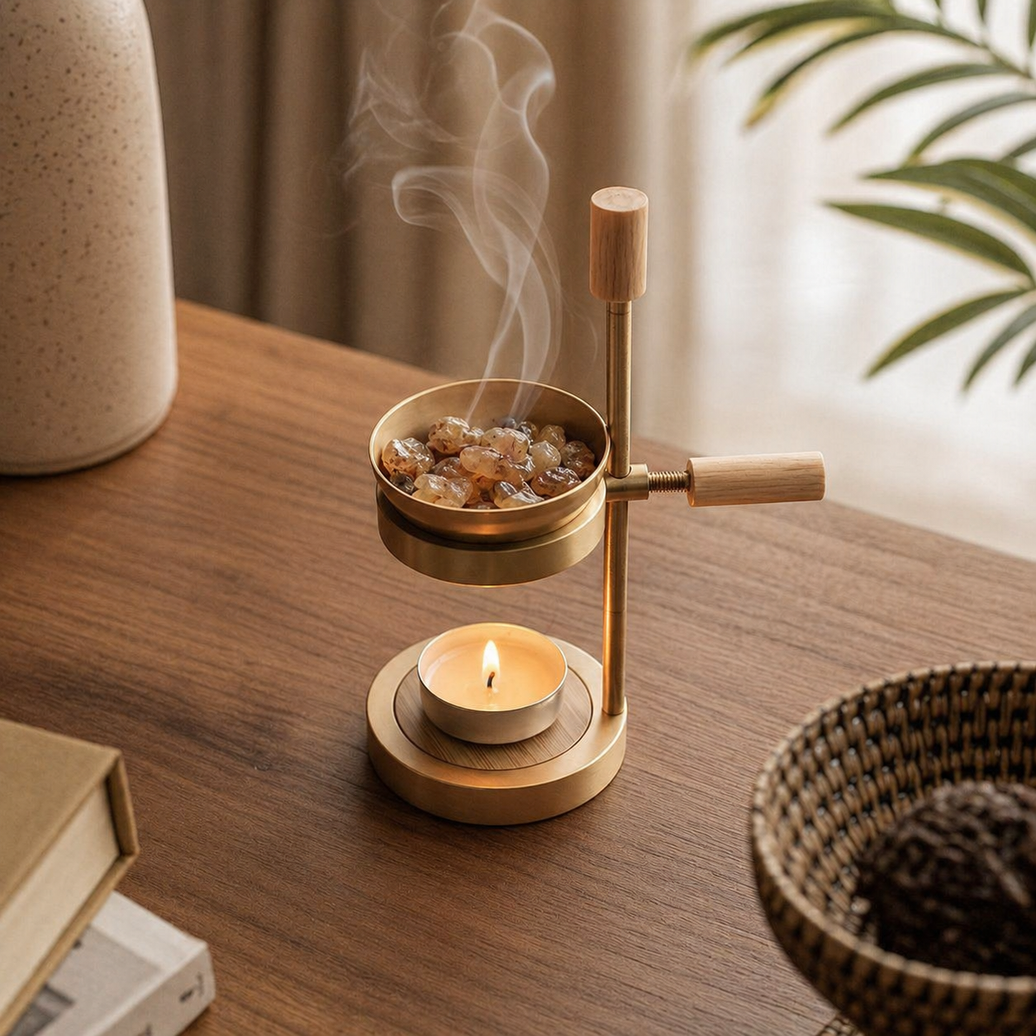
Frankincense is one of the world's oldest and most revered aromatic resins — harvested from the Boswellia tree, native to the arid regions of Oman, Somalia, Ethiopia, Sudan, and Yemen. For thousands of years, it has been burned in temples, traded along ancient spice routes, and treasured for its rich, warm, balsamic scent.
Where Does Frankincense Come From?
The resin is obtained by making incisions in the bark of Boswellia sacra and related species. The tree produces a milky sap that hardens into golden or amber-colored tears — these are the frankincense resin pieces you burn.
Major Frankincense Producing Regions
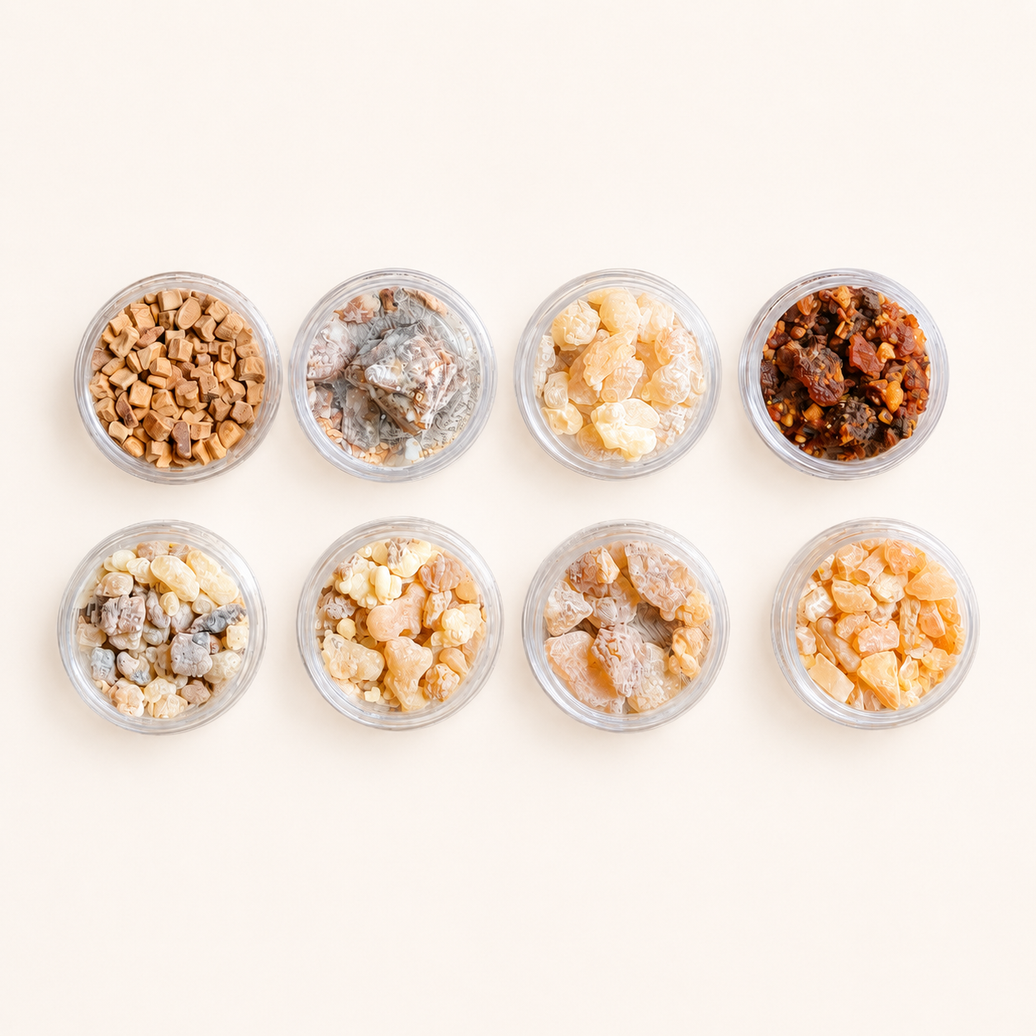
Frankincense is sourced from several key regions around the world. Each origin produces a distinct aromatic profile shaped by local climate, soil, and tree species:
-
Oman — Hojari Frankincense
Oman is widely regarded as the home of the world's finest frankincense, particularly the Hojari variety from the Dhofar province. Pale green to milky white in color, it produces clean, clear smoke with a bright citrus, pine, and fresh herbal character. Often called the "King of Frankincense." -
Somalia — Ogaden & Bosaso Regions
Somalia is one of the world's largest frankincense exporters, producing primarily Boswellia carterii and Boswellia frereana. The scent is warm and rich with woody and lightly sweet base notes, widely used in the perfume industry and religious ceremonies. -
Ethiopia — Tigray & Amhara Regions
Ethiopia produces Boswellia papyrifera, with a heavier, smokier, and more earthy aroma. It is more affordable and widely available as a commercial-grade frankincense on the global market. -
Sudan — Kordofan & Darfur Regions
Sudan also produces Boswellia papyrifera, primarily in the dry savannahs of Kordofan and Darfur. The scent carries warm woody, lightly smoky, and faintly sweet notes — similar in style to Ethiopian frankincense but with subtle regional differences. Sudan is a significant African frankincense exporter, though wild Boswellia trees face increasing pressure from deforestation and climate change. -
Yemen — Hadhramaut Region
Yemen was historically a central hub of the ancient frankincense trade, producing another variety of Boswellia sacra. The aroma is close to Omani frankincense, but production has declined sharply in recent years due to ongoing conflict, making it increasingly rare. -
India — Indian Frankincense (Shallaki)
India produces Boswellia serrata, primarily used in Ayurvedic medicine for its boswellic acid content and anti-inflammatory properties. The scent is milder compared to Middle Eastern varieties.
Among all origins, Omani Hojari frankincense remains the benchmark for purity, aromatic complexity, and rarity — and is the variety AUROOA recommends for the finest home burning experience.
How Has Frankincense Been Used Throughout History?
Frankincense has been central to spiritual and cultural rituals across civilizations:
- Ancient Egypt: Used in temple offerings and embalming rituals.
- Ancient Rome & Greece: Burned as offerings to the gods.
- Islamic tradition: Widely used in homes and mosques for purification and fragrance.
- Christian tradition: One of the three gifts of the Magi; still used in Catholic and Orthodox liturgy.
- Ayurveda & Traditional Medicine: Boswellic acids have been studied for anti-inflammatory properties.
What Does Frankincense Smell Like?
The scent of burning frankincense resin is complex and evolving — opening with bright citrus and pine notes, deepening into warm balsamic, woody, and slightly sweet undertones. It is grounding, meditative, and unmistakably ancient. No synthetic fragrance fully replicates it.
How to Burn Frankincense Resin at Home
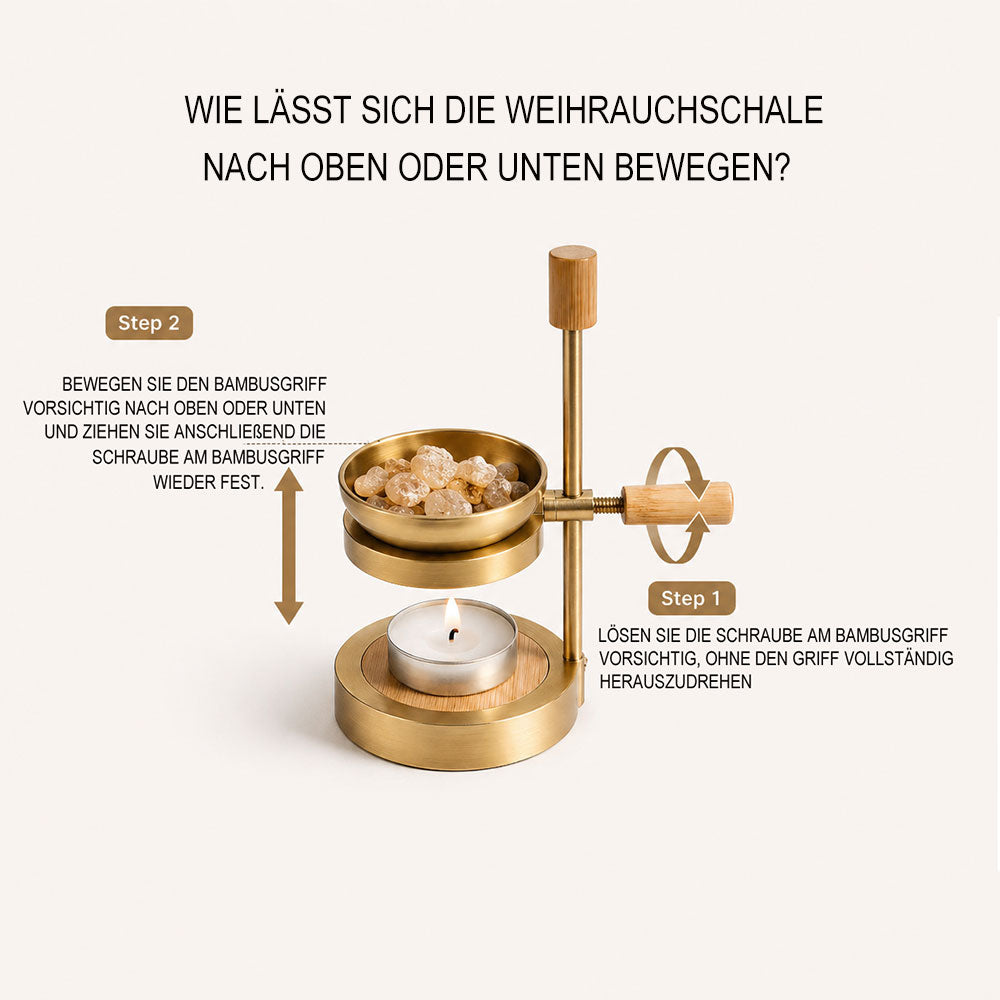
Traditionally, frankincense resin requires a charcoal disc to burn — producing heavy smoke and requiring careful handling. A modern alternative is an electric incense burner, which gently warms the resin at a controlled temperature, releasing its full aromatic profile without combustion, ash, or harsh smoke. Cleaner, safer, and more nuanced in scent.
Experience Frankincense the Modern Way
If you want to explore frankincense resin at home without the complexity of charcoal, our incense system is designed exactly for this:
Shop the Charcoal-Free Incense System →
Designed for frankincense resins, dry incense blends, aroma warming, and incense sticks — bringing the ancient ritual of frankincense into a modern, minimal home environment.
Explore our full range of premium frankincense resins and incense accessories at AUROOA.
Leave a comment