
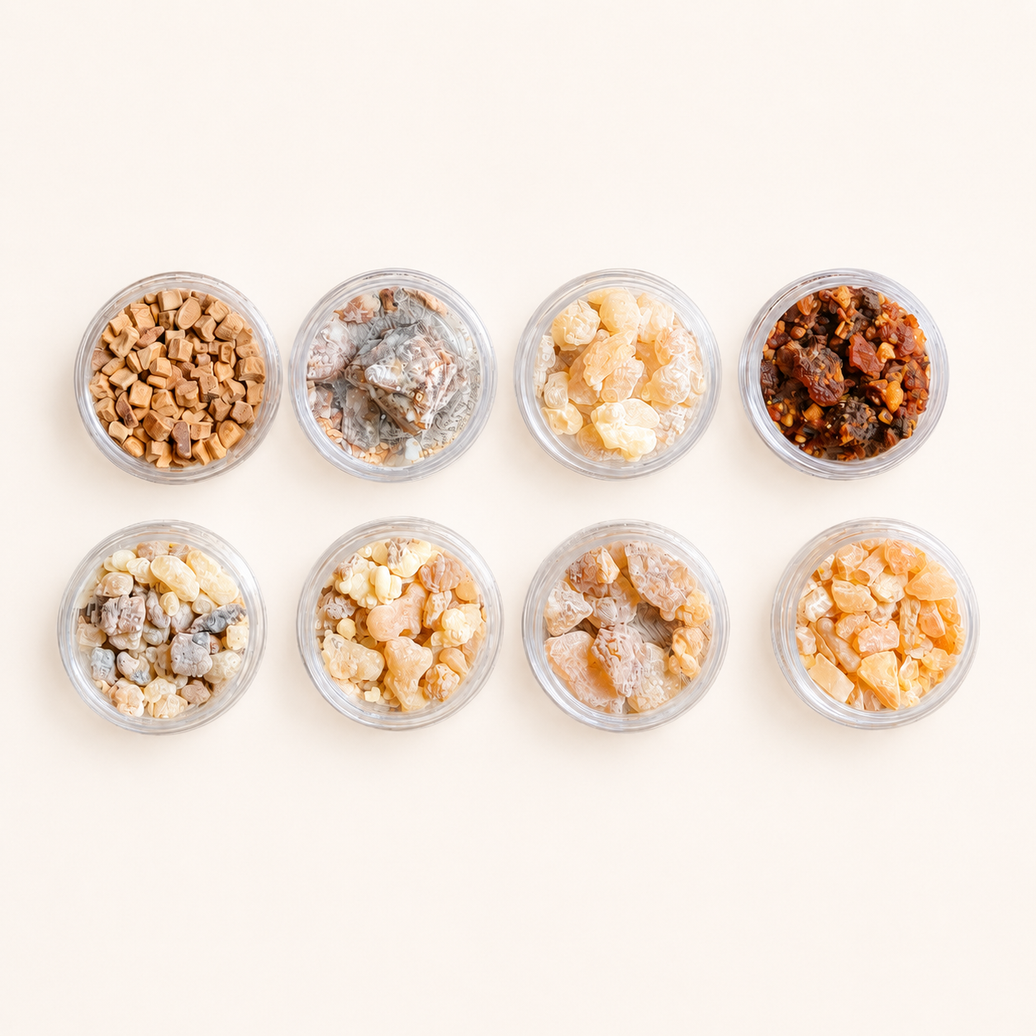
Natural resin incense such as frankincense and myrrh needs heat to release its aroma. One of the biggest choices when burning resin incense is how that heat is produced. Traditionally, resin is placed directly on hot charcoal, while charcoal-free incense burners use indirect heat from a candle or another controlled heat source.
Both methods can be used with natural resin incense, but they differ significantly in temperature, smoke, aroma, heat control and everyday convenience. Understanding these differences can help you choose the method that better suits the way you enjoy incense.
What Is a Charcoal Incense Burner?
A charcoal incense burner is designed to hold a hot charcoal disc or another suitable type of incense charcoal. Once the charcoal is fully heated, small pieces of resin incense are placed directly on top.
Because charcoal reaches a high temperature, the resin heats very quickly. It may melt, bubble, darken and eventually burn, releasing a strong aroma together with visible smoke. This direct-heating method has a long history and remains a common way to burn frankincense, myrrh and other natural aromatic resins.
What Is a Charcoal-Free Incense Burner?
A charcoal-free incense burner heats aromatic material without placing it directly on burning charcoal. Instead, the resin is usually placed in a dish or on a suitable surface positioned above a separate heat source.
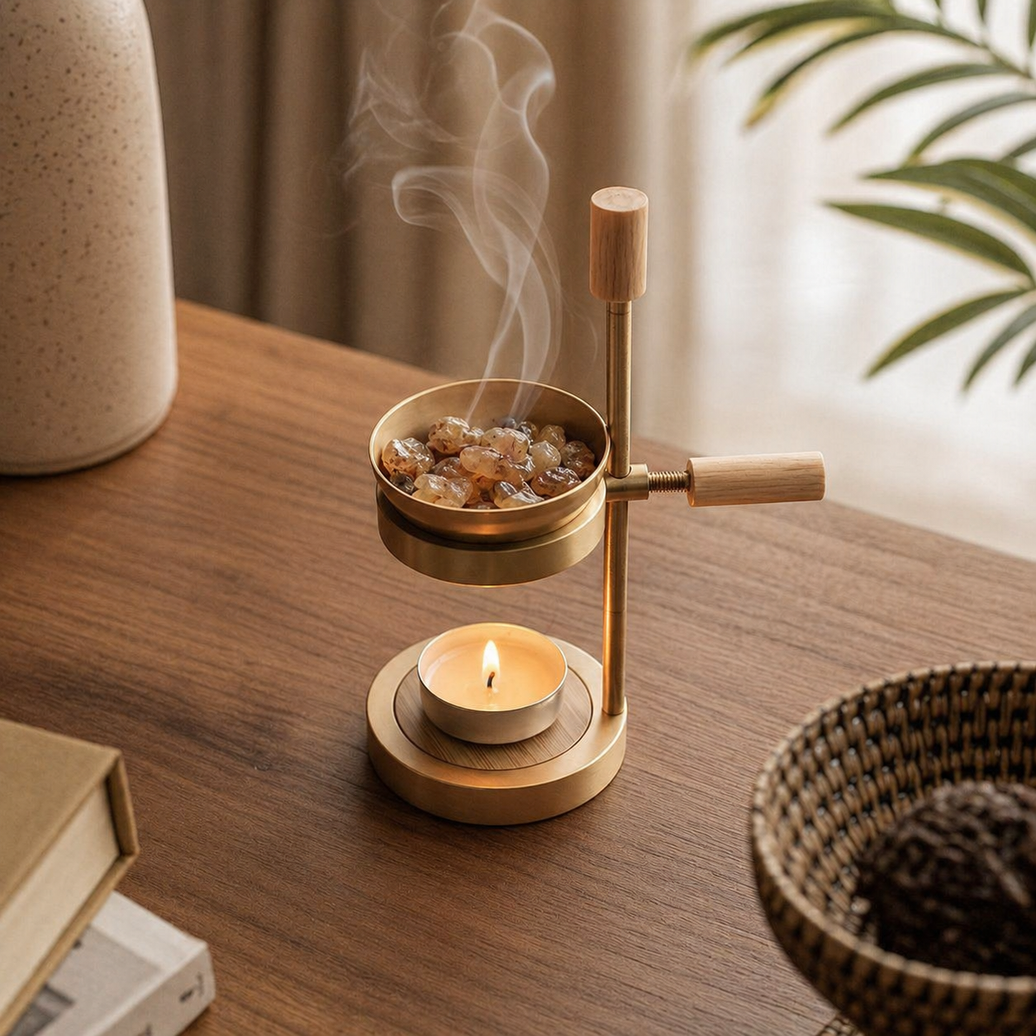
One common design uses a tealight candle underneath the incense dish. Heat from the candle gradually warms the dish and the resin above it. Rather than immediately burning the resin at very high temperatures, this indirect-heating method can allow the material to warm more gradually.
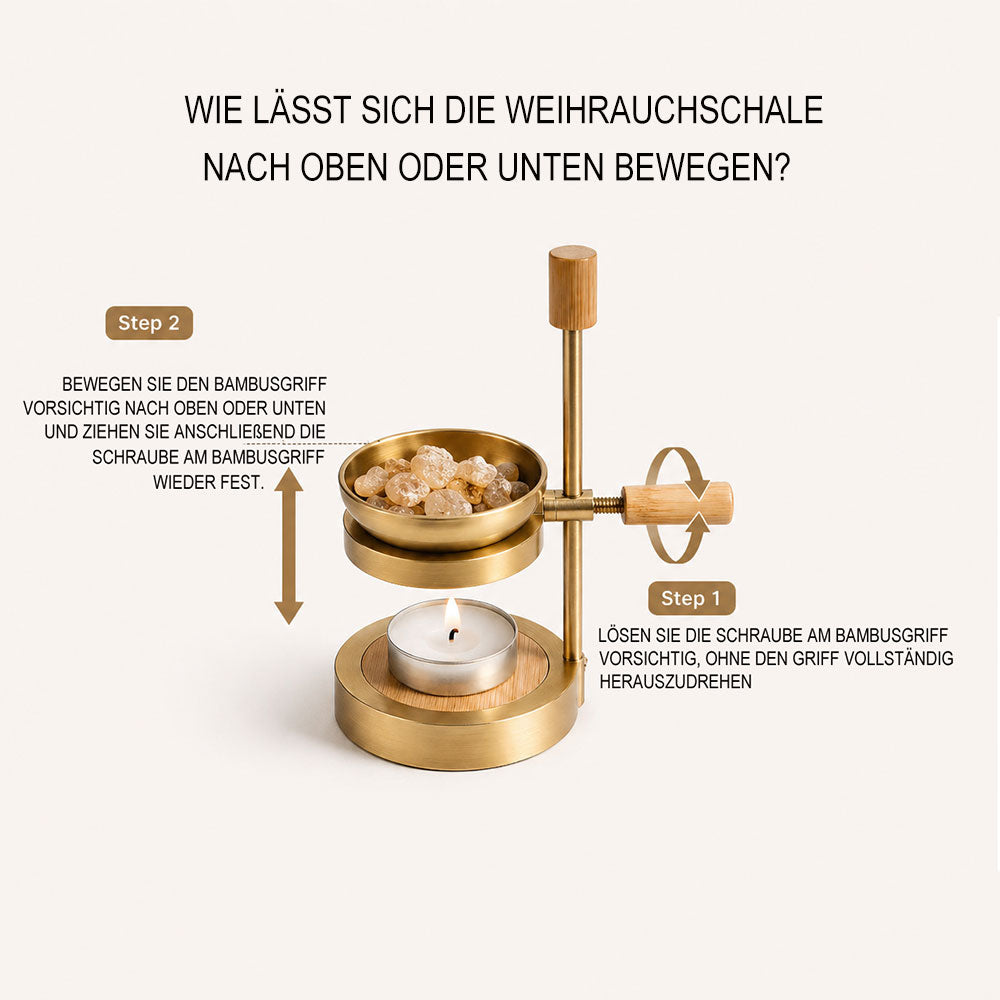
Some charcoal-free burners also allow the distance between the flame and incense dish to be adjusted, providing additional control over the heating intensity.
Charcoal vs. Charcoal-Free Incense Burners
The main difference between the two methods is not simply whether charcoal is present. The more important difference is how heat reaches the resin.
| Feature | Charcoal Burner | Charcoal-Free Burner |
|---|---|---|
| Heat source | Burning charcoal | Candle or indirect heat source |
| Heating method | Direct, high heat | Indirect, gentler heat |
| Heat intensity | Usually high | Can be lower and more gradual |
| Smoke | Generally more | Generally less |
| Heat control | Limited once charcoal is hot | Depends on burner design |
| Resin behavior | Melts and burns quickly | Can warm more gradually |
| Setup | Requires lighting charcoal | Usually simpler with a tealight |
| Ash | Charcoal produces ash | No charcoal ash |
Neither method is automatically better for everyone. They simply create different ways of experiencing natural resin incense.
Heat: The Biggest Difference
Temperature is one of the most important differences between charcoal and charcoal-free incense burning.
Once fully lit, incense charcoal produces strong heat that cannot easily be reduced. When resin is placed directly on the charcoal, it is exposed to that heat immediately. This can produce a powerful fragrance quickly, but the resin may also burn or darken rapidly.
Indirect heating separates the resin from the flame. Instead of sitting directly on the heat source, the resin is warmed through an incense dish or another suitable surface. This makes gentler heating possible.
With an adjustable incense burner, the distance between the flame and incense dish can be changed. Moving the dish closer to the flame increases the heat, while raising it farther away reduces the heating intensity.
Which Method Produces More Smoke?
Charcoal burning generally produces more visible smoke because the resin is exposed to intense direct heat and the charcoal itself is actively burning.
With indirect candle heating, the resin can release fragrance without immediately reaching the same temperatures. As a result, the experience is often less smoky, especially when the burner is adjusted to a gentle heating level.
However, charcoal-free does not mean completely smoke-free. If resin becomes too hot, it can still darken, scorch or produce smoke. The amount depends on the resin, temperature, quantity used and burner setup.
Does Charcoal Change the Aroma of Resin Incense?
Heating temperature can influence how resin incense smells. When frankincense or myrrh is exposed to very high heat, aromatic compounds are released rapidly and the resin may begin to burn. This can create a stronger, smokier fragrance.
Gentler indirect heating can produce a different experience because the resin warms more gradually. Instead of immediately burning, it may release its aroma over a longer period before becoming heavily darkened.
Neither aroma is necessarily the “correct” one. Some people prefer the intensity of traditional charcoal burning, while others prefer exploring natural resins at lower temperatures.
Which Method Is Better for Frankincense?
Frankincense can be used with either method. Charcoal provides a traditional way to burn the resin and quickly creates an intense aromatic experience. Indirect heating provides another option for people who want to warm frankincense more gradually.
Different varieties of frankincense can also behave differently when heated. Resin size, origin, composition and temperature can all affect the resulting aroma.
If you want to try the indirect method, read our guide on how to burn frankincense resin without charcoal.
What About Myrrh?
Myrrh can also be heated using charcoal or indirect heat. Its deeper, earthier and more bittersweet aroma creates a noticeably different experience from many types of frankincense.
Because the two resins differ in fragrance and physical characteristics, experimenting with heat can help reveal those differences. If you are deciding which resin to use, our guide to frankincense vs. myrrh explains their origins, appearance, aromas and heating characteristics in more detail.
Advantages of Burning Resin with Charcoal
Charcoal remains popular for several reasons. It is traditional, produces strong heat quickly and works with many types of natural resin incense. For people who enjoy a powerful fragrance and visible incense smoke, charcoal can be an appealing method.
It is also relatively simple in principle: once the charcoal is properly lit and heated, resin can be placed directly on top.
The main trade-off is that the temperature is difficult to reduce once the charcoal is fully burning. The high heat can consume resin quickly and produces both smoke and charcoal ash.
Advantages of a Charcoal-Free Incense Burner
The main advantage of indirect heating is greater separation between the resin and the flame. This can make it easier to warm resin gradually instead of immediately exposing it to very high temperatures.
A candle-heated system also eliminates the need to prepare charcoal and avoids charcoal ash. If the burner includes adjustable height, the user can change the distance between the tealight flame and incense dish to experiment with different heating levels.
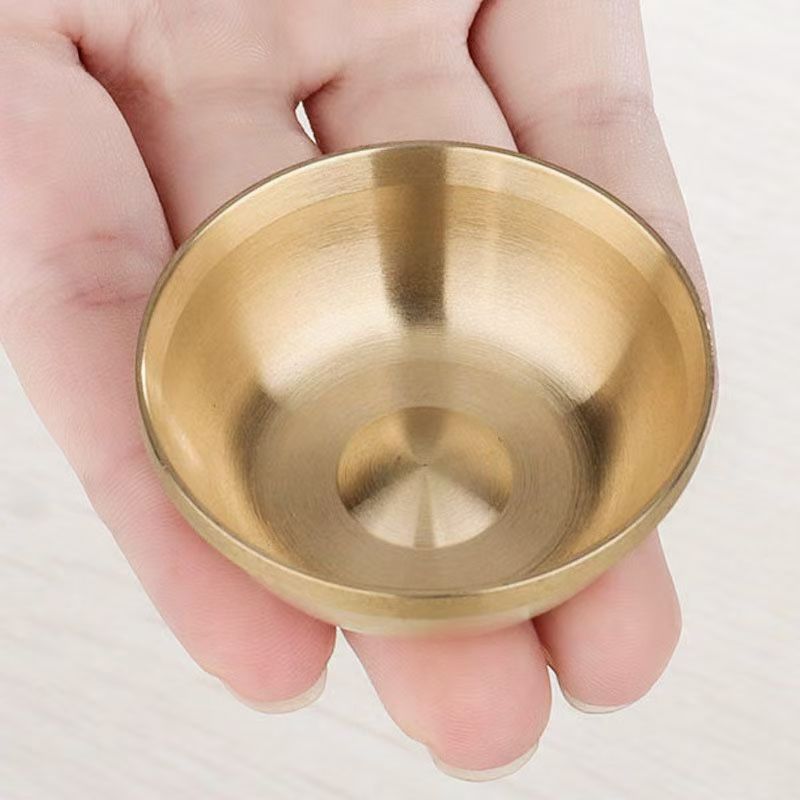
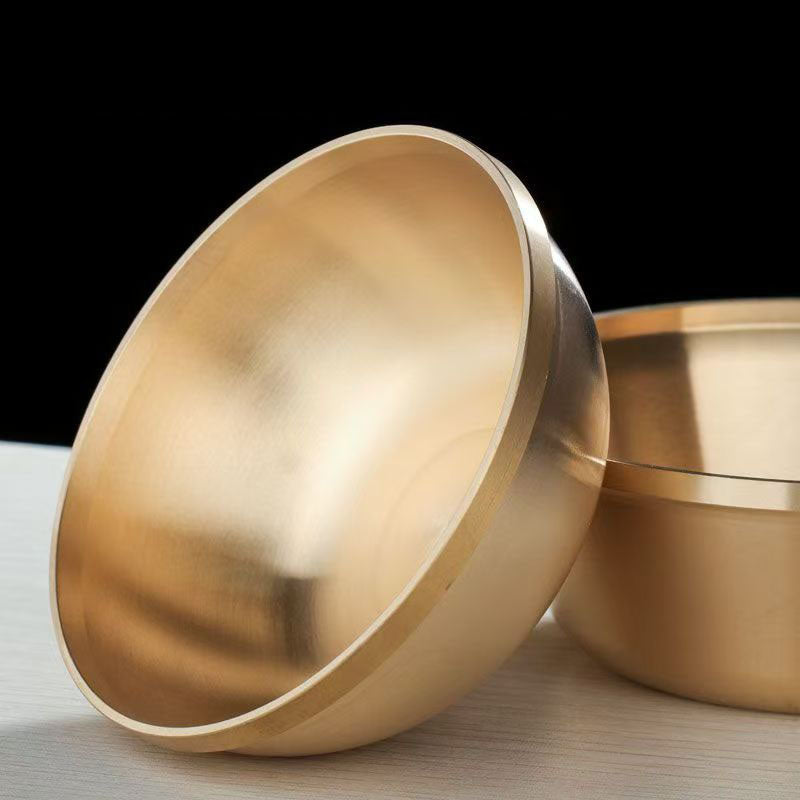
The Aurooa Incense Burner uses this adjustable-height approach. Its brass incense dish can be raised or lowered above a tealight candle, allowing the heating intensity to be adjusted manually when using natural resin incense.
Is Charcoal-Free Incense Burning Safer?
Both methods involve heat, and neither should be treated as risk-free. Charcoal becomes extremely hot and remains hot for some time after use. Candle-heated burners also involve an open flame and heated metal components.
Whichever method you choose, place the burner on a stable, heat-resistant surface away from flammable materials. Keep it away from children and pets, provide appropriate ventilation, never leave it unattended while in use, and allow the burner and heating materials to cool completely before handling or cleaning them.
Can One Incense Burner Support Both Methods?
Some incense burners are designed primarily for one heating method, while multi-purpose designs may support several incense formats or heating approaches through interchangeable accessories.
Before using charcoal in any burner, confirm that the burner and the specific accessory are designed to withstand the temperatures produced by charcoal. A component intended only for gentle candle heating should not automatically be assumed to be suitable for direct charcoal burning.
If you are new to resin incense in general, our complete guide to using a resin incense burner explains the basic methods, heat control and practical steps in more detail.
Which Incense Burner Should You Choose?
Choose based on the type of incense experience you prefer rather than assuming that one method is universally superior.
Charcoal may suit you if you prefer traditional resin burning, stronger heat, more visible smoke and an intense fragrance experience.
Charcoal-free indirect heating may suit you if you prefer gentler heating, less smoke and ash, easier everyday preparation, or more control over the temperature of your resin.
Some incense users may prefer having access to both methods and choosing between them depending on the resin and the experience they want.
Final Thoughts
The essential difference between charcoal and charcoal-free incense burners is the way heat is delivered to the incense. Charcoal places natural resin directly on an intense heat source, while charcoal-free systems can use indirect heat to warm the resin more gradually.
For frankincense, myrrh and other natural aromatic resins, both approaches have their place. Understanding temperature, smoke and heat control makes it easier to choose the method that matches the aroma and incense experience you prefer.
Leave a comment