

Frankincense and myrrh are two of the best-known natural aromatic resins in the world. They have been used for centuries in incense traditions, religious ceremonies, perfumery and aromatic practices.
Because they are often mentioned together, it is easy to assume that frankincense and myrrh are very similar. In reality, although both are natural tree resins, they come from different trees and can differ noticeably in aroma, appearance and how they behave when heated.
If you are choosing between frankincense and myrrh—or wondering whether you can use them together—this guide explains the most important differences.
Frankincense vs. Myrrh at a Glance
| Frankincense | Myrrh | |
|---|---|---|
| Plant source | Boswellia species | Commiphora species |
| Material | Natural tree resin | Natural tree resin |
| Typical aroma | Fresh, resinous, woody, sometimes citrus-like | Deep, earthy, warm, slightly bitter |
| Appearance | Often pale yellow, golden or amber; varies by type | Usually darker amber to reddish-brown or brown |
| Aroma character | Brighter and fresher | Richer, darker and heavier |
| Can be heated without charcoal? | Yes | Yes |
| Can they be mixed? | Yes | Yes |
The exact appearance and aroma can vary significantly depending on species, origin, grade, age and natural variation.
What Is Frankincense?
Frankincense is an aromatic resin obtained from trees belonging to the Boswellia genus. Small cuts are traditionally made in the bark of the tree, allowing resinous sap to emerge. As the resin is exposed to air, it gradually hardens into the pieces often called resin tears.
Different species of Boswellia grow in regions including the Arabian Peninsula, the Horn of Africa and parts of India. Common species include:
- Boswellia sacra
- Boswellia carterii
- Boswellia frereana
- Boswellia serrata
- Boswellia papyrifera
This is one reason not all frankincense smells exactly the same. Depending on the species and origin, frankincense may have woody, resinous, citrus-like, pine-like, fresh or slightly sweet aromatic notes.

What Is Myrrh?
Myrrh is also a natural aromatic tree resin, but it comes primarily from trees belonging to the Commiphora genus rather than Boswellia. One of the best-known sources is Commiphora myrrha.
Like frankincense, myrrh is collected from resin released through the bark and then allowed to harden. However, its appearance and fragrance are generally different.
Myrrh is often darker than frankincense, ranging from amber and reddish-brown to deep brown. Its aroma is typically described as earthy, warm, woody, resinous, slightly bitter and rich or balsamic.
Compared with the brighter character of many frankincense varieties, myrrh often creates a deeper and heavier aromatic profile.

What Does Frankincense Smell Like?
There is no single frankincense fragrance because different Boswellia species and growing regions produce different aromatic profiles.
In general, frankincense can smell:
Resinous + woody + fresh + slightly sweet
Some varieties also have noticeable citrus or pine-like notes. The fragrance can change as the resin becomes warmer: gentle heating may reveal different aromatic notes gradually, while very high heat can release fragrance much more quickly and produce more smoke.
This variation is part of what makes exploring different types of frankincense interesting. For example, Ethiopian and Somali frankincense do not necessarily smell identical even though both are sold as frankincense.
What Does Myrrh Smell Like?
Myrrh generally has a darker aromatic character.
A simple comparison is:
Frankincense → brighter, fresher and more lifted
Myrrh → deeper, earthier and warmer
Myrrh may have woody, balsamic and slightly bitter notes that become particularly noticeable when the resin is heated. This makes the two resins complementary rather than interchangeable.
Someone who enjoys the freshness of frankincense may not necessarily prefer myrrh by itself, while someone looking for a darker and richer fragrance may prefer myrrh.
Is Frankincense the Same as Myrrh?
No. Frankincense and myrrh are both natural aromatic resins, but they come from different botanical groups:
Frankincense = Boswellia
Myrrh = Commiphora
They also differ in their typical appearance and aromatic profile.
The reason they are so frequently associated with one another is largely historical and cultural. Both have long histories as valued aromatic materials and have often been used in overlapping incense and ceremonial traditions.
From a botanical and aromatic perspective, however, they are different materials.
Which Smells Better: Frankincense or Myrrh?
There is no universal answer because fragrance preference is subjective.
Choose frankincense if you generally prefer:
- Fresher resinous aromas
- Woody fragrances
- Brighter aromatic notes
- Citrus-like notes in some varieties
- Exploring differences between Boswellia species and origins
Choose myrrh if you generally prefer:
- Deeper aromas
- Earthy fragrances
- Warm woody notes
- Richer resinous character
- Slightly bitter or balsamic notes
If you are completely new to natural resin incense, frankincense is often an accessible starting point because there are many different varieties to explore. The best way to understand the difference, however, is to smell them separately before blending them.
Can You Burn Frankincense and Myrrh Without Charcoal?
Yes. Both frankincense and myrrh require heat to release their aroma, but that heat does not necessarily have to come from charcoal.
Common methods include:
- Charcoal
- Candle-heated resin incense burners
- Electric resin warmers
Traditional charcoal provides strong heat and tends to release fragrance quickly.
Indirect candle heating works differently. A tealight warms a heat-resistant dish containing the resin, allowing the aromatic material to heat more gradually.
With an adjustable incense burner, changing the distance between the candle and resin dish also changes the amount of heat reaching the resin.
If you want detailed instructions specifically for frankincense, see our guide How to Burn Frankincense Resin Without Charcoal.
Can You Mix Frankincense and Myrrh?
Yes. Frankincense and myrrh can be heated together, and the combination has a long history in aromatic and incense traditions.
Their contrasting fragrance profiles are one reason they work well as a blend. Frankincense can contribute brighter, fresher and more lifted resinous notes, while myrrh adds deeper, warmer and earthier characteristics.
If you have never used either resin before, start by heating them separately. This allows you to understand what each material contributes before experimenting with different proportions.
A simple starting point is:
2 parts frankincense + 1 part myrrh
This is not a required formula. It is simply an easy ratio to begin experimenting with, and you can adjust it according to your own fragrance preference.
Does Frankincense Burn Differently From Myrrh?
It can. Natural resins vary considerably in hardness, oil content, size and composition.
When heated, some pieces may:
- Soften
- Become glossy
- Darken
- Partially melt
- Release aromatic vapour
- Produce visible smoke
Different frankincense species can even behave differently from one another.
For this reason, there is no single perfect temperature for every natural resin. Start with moderate heat and make small adjustments.
If the aroma is weak, gradually increase the heat. If the resin begins to smell burnt or produces more smoke than you want, reduce the heat.
Frankincense vs. Myrrh: Which Should You Choose?
Rather than thinking of one as better than the other, think of them as two different aromatic experiences.
Choose frankincense when you want something generally fresher, brighter and more resinous.
Choose myrrh when you want something generally deeper, warmer and earthier.
Choose both if you want to explore how contrasting natural resins can work together.
Once you become familiar with these two materials, you can also explore other aromatic resins such as benzoin and copal.
Choosing an Incense Burner for Frankincense and Myrrh
Because both frankincense and myrrh are natural resins, they need a suitable source of heat.
If you prefer traditional charcoal burning, use a burner specifically designed to safely hold hot charcoal.
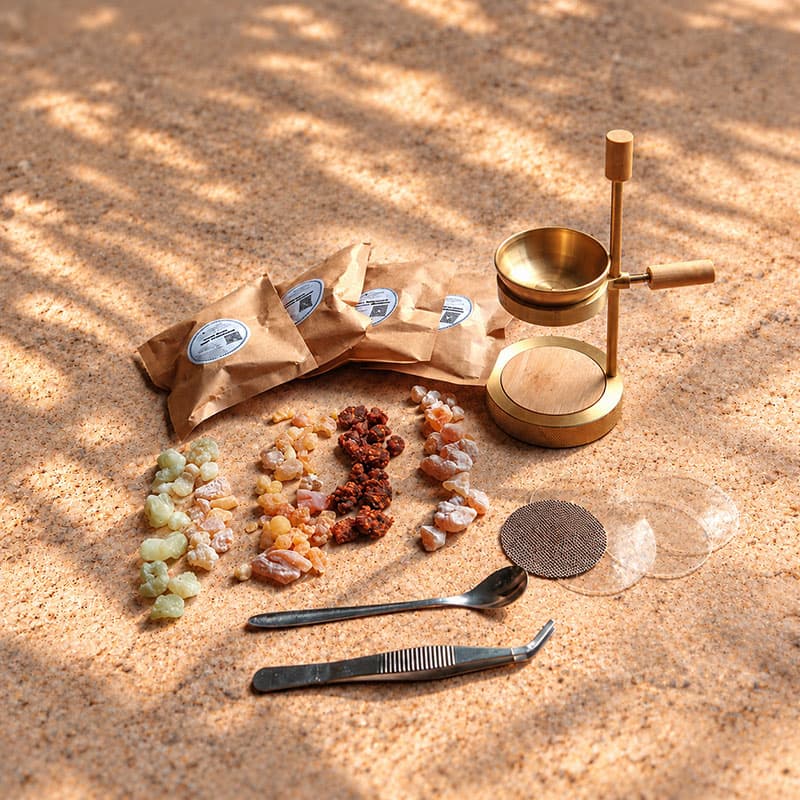
If you prefer charcoal-free heating, a candle-heated resin burner can provide indirect heat without placing the resin directly on burning charcoal.
The Aurooa Adjustable Brass Incense Burner uses a tealight candle beneath the incense area and allows the heating distance to be adjusted.
This is useful when experimenting with different natural resins because frankincense, myrrh and other aromatic materials may respond differently to heat.
Start gently and increase the temperature gradually until you find the fragrance intensity you prefer.
Frequently Asked Questions
Are frankincense and myrrh the same thing?
No. Frankincense generally comes from trees in the Boswellia genus, while myrrh generally comes from Commiphora. Both are natural aromatic resins, but they have different botanical origins and fragrance profiles.
What is the main difference between frankincense and myrrh?
One of the easiest differences to notice is aroma. Frankincense is generally brighter, fresher and sometimes citrus-like, while myrrh tends to smell deeper, earthier, warmer and slightly bitter.
Can you use frankincense and myrrh together?
Yes. They can be blended and heated together. If you are new to natural resin incense, try each separately first so you can recognize their individual aromas.
Do frankincense and myrrh need charcoal?
No. Charcoal is one traditional heating method, but both resins can also be warmed using a suitable candle-heated incense burner or electric resin warmer.
Which is better for beginners?
Frankincense is a good starting point because many different varieties are available and it allows you to explore how species and origin affect aroma. However, this is ultimately a matter of personal fragrance preference.
Does all frankincense smell the same?
No. Frankincense from different Boswellia species, growing regions and grades can have noticeably different aromatic characteristics.
Can frankincense and myrrh be used in the same incense burner?
Yes, provided the burner is designed for natural resin incense and the heat source is used according to the burner’s instructions.
Explore Natural Resin Incense
Frankincense and myrrh may be frequently mentioned together, but experiencing them individually reveals how different they really are.
Frankincense offers a wide family of Boswellia resins with fragrances ranging from fresh and citrus-like to woody and deeply resinous. Myrrh brings a darker, warmer and more earthy character.
There is no need to choose only one. Natural resin incense is something to explore: different origins, different resins, different combinations and different levels of heat can all produce different aromatic experiences.
Safety Note: Always use incense with a suitable burner on a stable, heat-resistant surface. Never leave candles, charcoal or heated incense burners unattended. Keep hot burners and incense materials away from children, pets, drafts and flammable objects. Allow the burner to cool completely before handling or cleaning.
Laisser un commentaire