
Natural resin incense has been used for centuries for its rich and complex aroma. Unlike incense sticks or cones, natural resins such as frankincense and myrrh usually require a separate heat source to release their fragrance. This is where a resin incense burner comes in.
Depending on the burner, resin can be burned directly over charcoal or gently warmed using indirect heat from a candle or another controlled heat source. In this guide, we’ll explain how resin incense burners work, how to use one, how to control the heat, and how different methods can be used with natural resins such as frankincense and myrrh.
What Is a Resin Incense Burner?
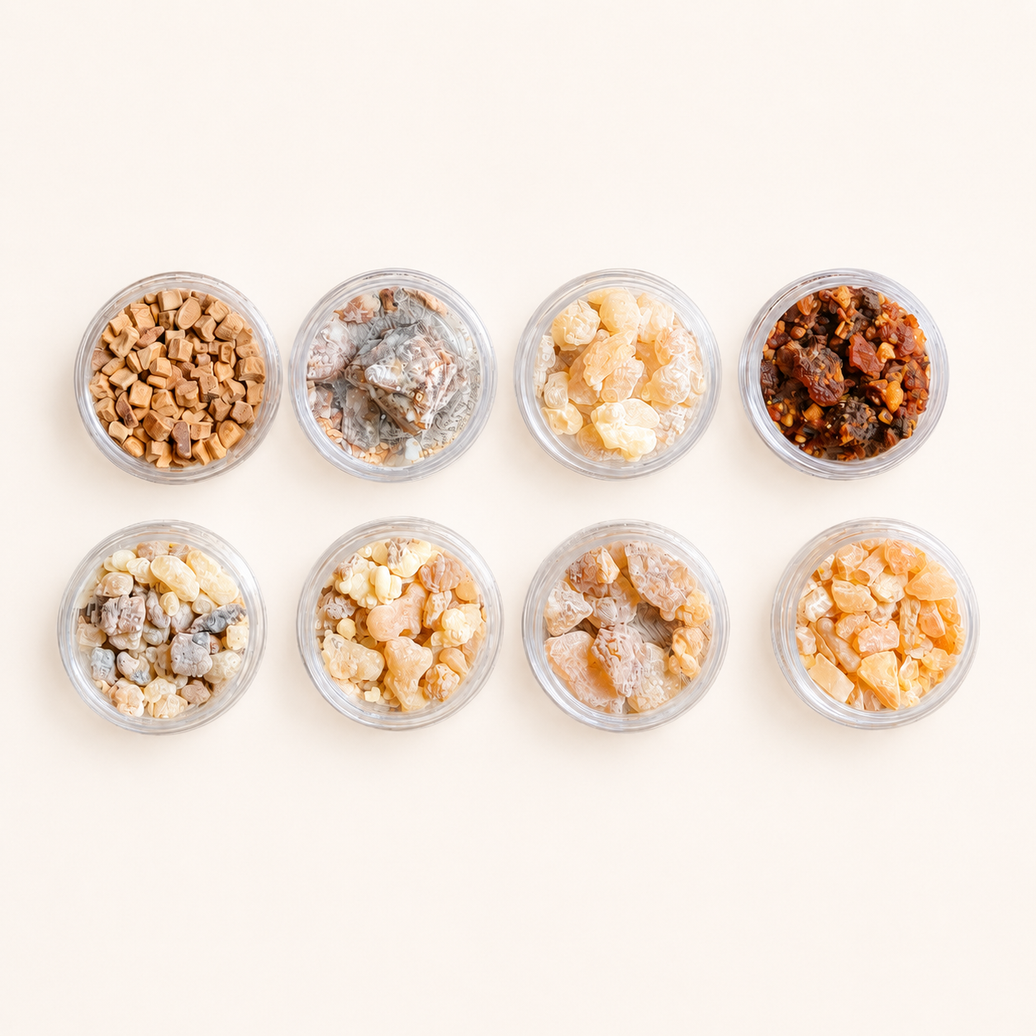
A resin incense burner is a vessel or heating system designed for aromatic natural resins such as frankincense, myrrh, benzoin and copal. Unlike incense sticks, which contain combustible material and can continue burning once lit, raw resin normally requires an external heat source.
As the resin warms or burns, its aromatic compounds are released into the surrounding air. Resin incense burners generally use one of two approaches: direct heating, most commonly with hot charcoal, or indirect heating, where the resin is positioned above a candle or another heat source.
Both methods can release the aroma of natural resin, but they create noticeably different experiences.
What Can You Burn in a Resin Incense Burner?
The exact materials you can use depend on the design of the burner and the accessories supplied with it. Common materials include:
- Frankincense resin
- Myrrh resin
- Benzoin resin
- Copal
- Storax and other aromatic resins
- Dry herbal incense blends
Some multi-purpose incense burners can also accommodate powder incense, incense sticks, incense cones, or an aroma bowl for water with a few drops of fragrance or essential oil when the appropriate accessory is used. Always make sure the burner and accessory are suitable for the material you intend to heat.
Method 1: Burning Resin Incense with Charcoal
Charcoal is one of the traditional ways to burn resin incense. A charcoal disc is lit and placed inside a suitable heat-resistant incense burner. Once the charcoal is fully heated, a small amount of resin is placed on top. The intense heat causes the resin to melt and burn, releasing its aroma together with visible smoke.
Basic Steps
- Place the incense burner on a stable, heat-resistant surface.
- Light a suitable incense charcoal disc according to its instructions.
- Allow the charcoal to become fully heated.
- Place a small amount of resin on the charcoal.
- Add more resin only when needed.
Because charcoal reaches high temperatures, a small amount of resin is usually enough. Never leave burning charcoal unattended, and keep the burner away from children, pets and flammable materials.
Method 2: Heating Resin Incense Without Charcoal
Resin incense does not always have to be burned directly. It can also be warmed using gentle indirect heat.
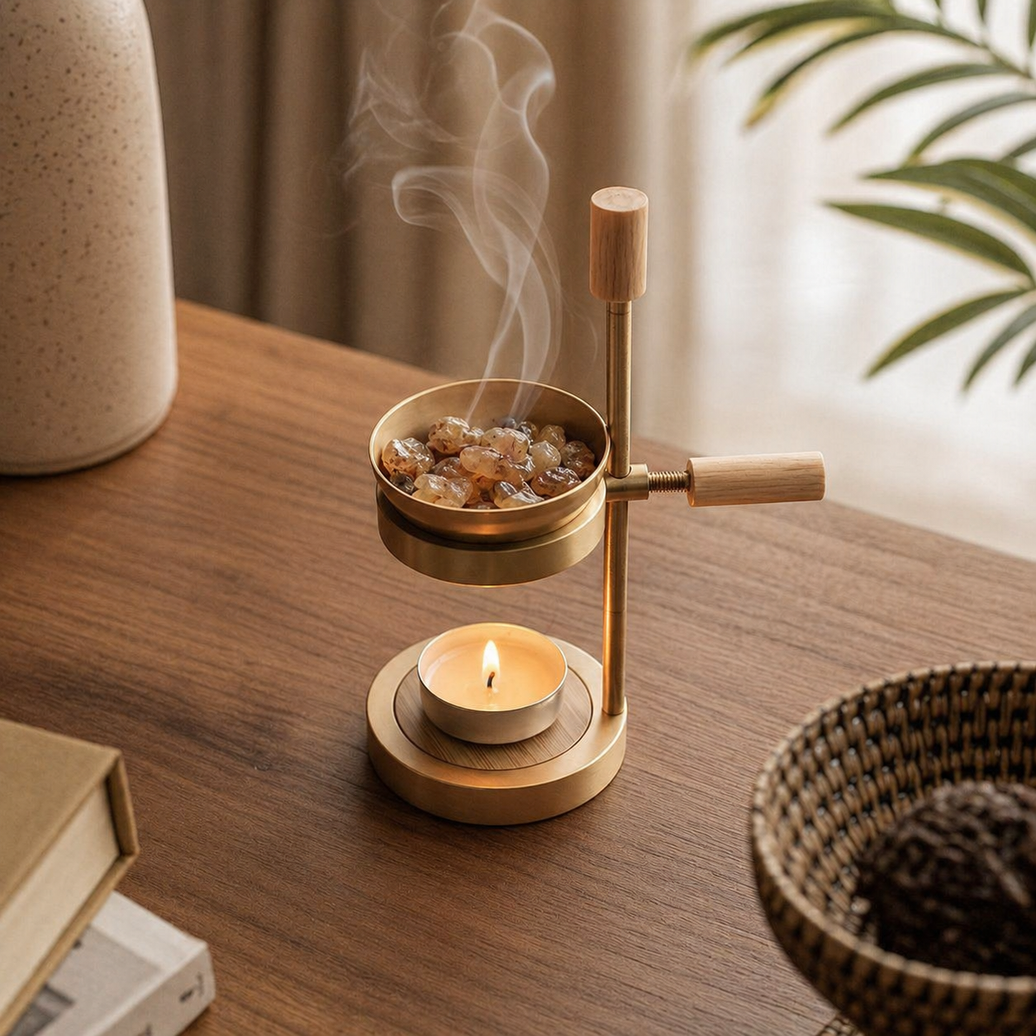
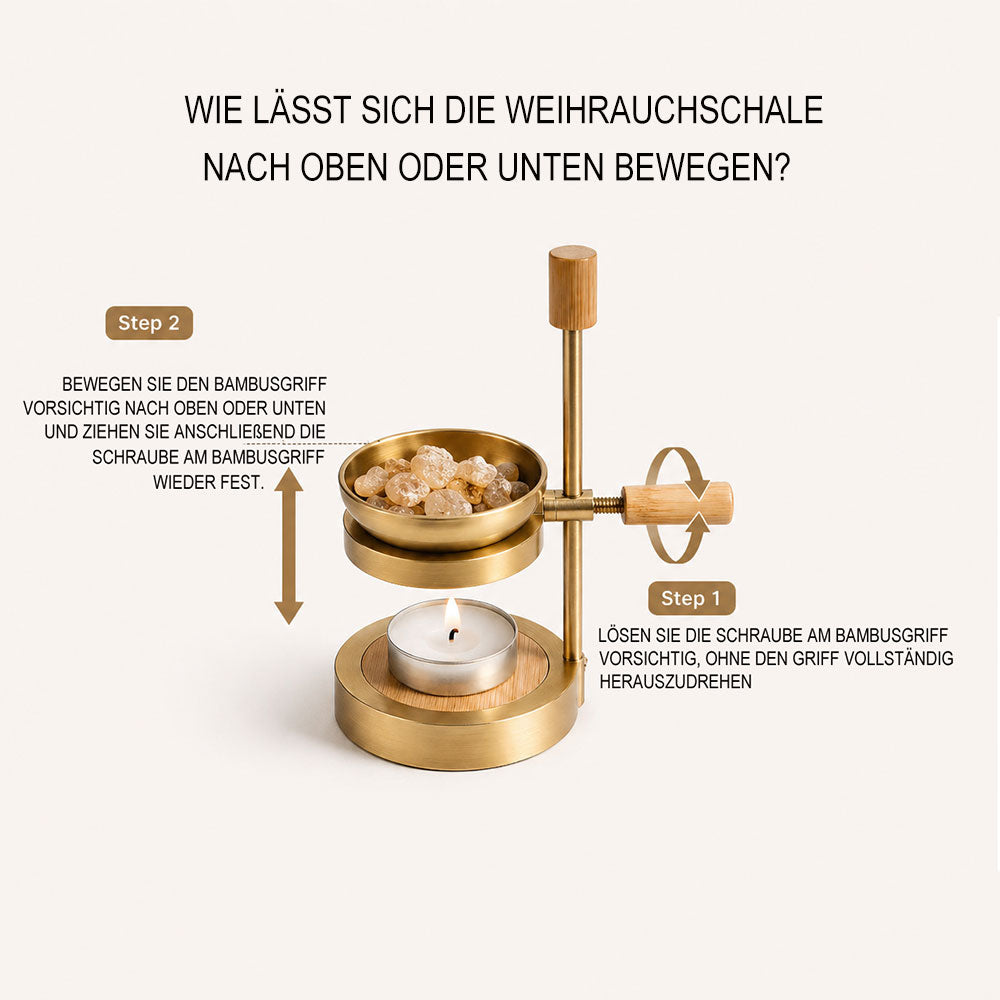
A candle-heated resin incense burner typically positions an incense dish above a tealight candle. The flame heats the dish, which gradually warms the resin. This method generally produces less smoke than placing resin directly on hot charcoal. If the burner allows the distance between the candle and resin dish to be changed, the heating intensity can also be adjusted.
For a detailed walkthrough, read our guide on how to burn frankincense resin without charcoal.
Why Heat Control Matters
Natural resins do not all behave exactly the same when heated. If the heat is too low, very little aroma may be released. If the heat is too high, the resin can darken or burn quickly, producing a stronger and smokier scent.
With indirect heating, the goal is usually to find a level where the resin warms gradually and releases its fragrance without immediately scorching. With an adjustable burner, you can control the heat by changing the distance between the flame and the incense dish. The closer the dish is to the flame, the stronger the heat; the farther away it is, the gentler the heating.
The Aurooa Incense Burner uses an adjustable-height brass design with a tealight candle as its heat source, allowing the distance between the flame and incense dish to be adjusted manually.
How Much Resin Should You Use?
Start with a small amount. For many natural resins, a few small granules are enough to begin exploring the aroma. Using too much resin at once can make temperature control more difficult and may create more residue in the incense dish.
You can always add another small piece once the fragrance begins to fade. Different resins vary in size, composition and aroma intensity, so experimentation is part of learning how each resin responds to heat.
Frankincense vs. Myrrh in a Resin Burner
Frankincense and myrrh are both natural aromatic resins, but they have noticeably different fragrance profiles. Frankincense can have fresh, citrus-like, pine-like, balsamic or woody characteristics depending on its botanical variety and origin. Myrrh generally offers a deeper, warmer, earthier and more bittersweet aroma.
Their behavior under heat can also differ, so experimenting with the heating distance can help you find the aroma and intensity you prefer. If you are deciding which resin to try, see our guide to frankincense vs. myrrh.
Can You Mix Different Resins?
Yes. Frankincense and myrrh are often used together, and other aromatic resins can also be combined. If you are experimenting for the first time, begin with small quantities so that one resin does not completely overpower the other.
There is no single mixing ratio that works for everyone. Aroma preference, resin variety, quantity and heating temperature can all influence the result.
How Long Does Resin Incense Last?
There is no fixed heating time for natural resin incense. How long it continues releasing fragrance depends on the type of resin, the size of the pieces, the amount used, the heating temperature, and whether charcoal or indirect heat is used.
With indirect heating, resin may gradually soften and change color or texture as its aromatic compounds are released. When little fragrance remains or the aroma changes significantly, extinguish the heat source and allow the burner to cool before removing the residue.
How to Clean a Resin Incense Burner
Resin can become sticky when heated and may harden again as it cools. Always allow the burner and incense dish to cool completely before cleaning. Hardened residue should be removed gently rather than aggressively scraped with a sharp object that could damage the surface.
The best cleaning method depends on the material of the incense dish. For more detailed instructions, see our guide on how to clean a resin incense burner.
Choosing a Resin Incense Burner
When choosing a resin incense burner, consider:
- Stability
- Heat-resistant construction
- Distance between the heat source and resin
- Ability to control the heat
- Incense dish material
- Ease of cleaning
- Compatibility with the incense materials you use
If you primarily use natural resin incense and prefer less direct burning, an adjustable indirect-heating burner can provide more control than a fixed-distance design.
You can also explore Aurooa's frankincense and natural resin incense collection to discover different aromatic resins for your burner.
Resin Incense Burner Safety
Whether you use charcoal or a tealight candle, an incense burner involves heat and, in many cases, an open flame. Place the burner on a stable, heat-resistant surface and keep it away from curtains, paper and other flammable materials.
Keep burning incense away from children and pets, provide suitable ventilation, and never leave burning charcoal or a lit candle unattended. Allow all metal components and accessories to cool completely before cleaning or handling heated areas.
Final Thoughts
Learning how to use a resin incense burner is largely about understanding how different natural resins respond to heat. Charcoal provides a traditional and intense method, while indirect heating offers a gentler way to explore the aroma of frankincense, myrrh and other aromatic resins.
Start with a small amount of resin, adjust the heat gradually, and give each material time to release its fragrance. As you become familiar with different resins and heating temperatures, you can find the combination that best suits the incense experience you prefer.
Hinterlassen Sie einen Kommentar